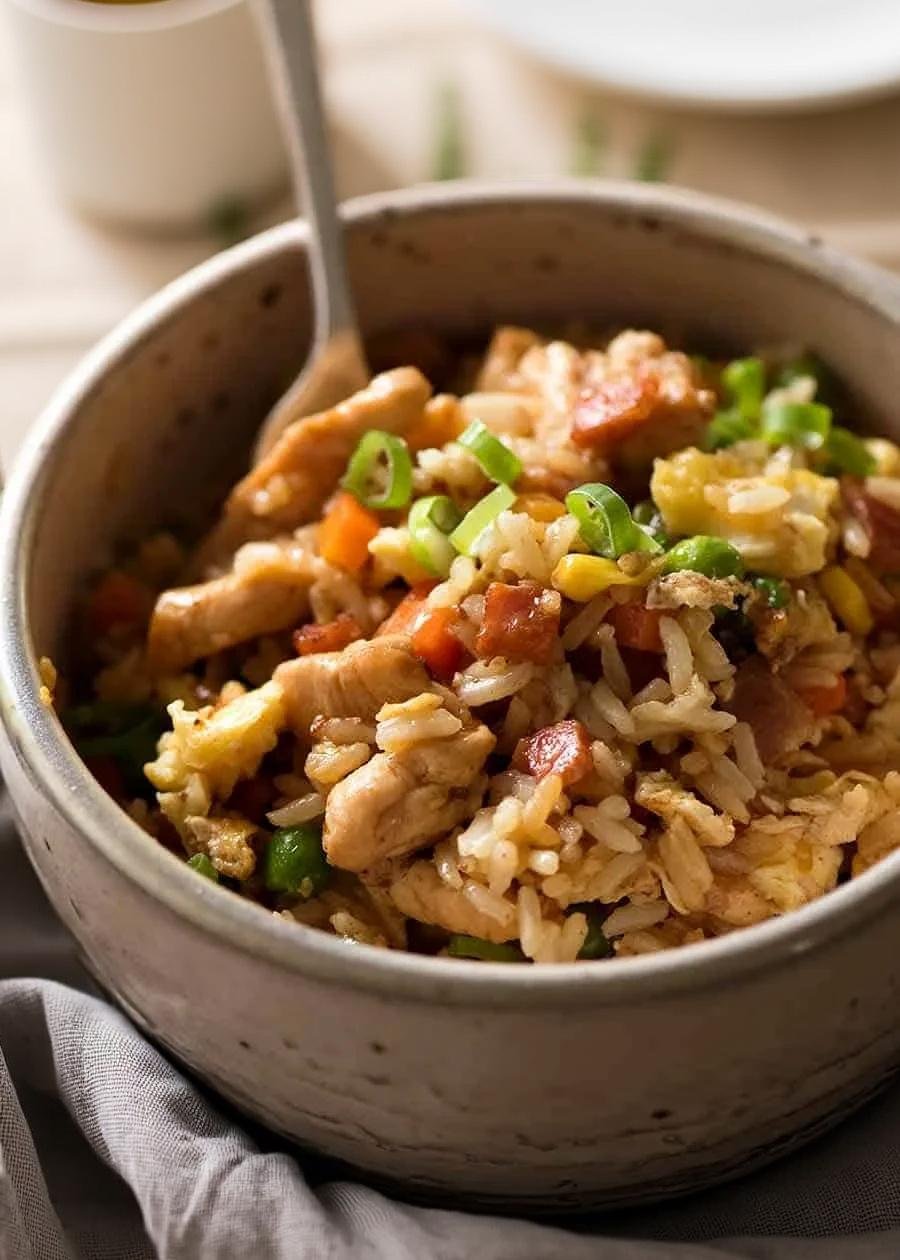
Everyone's had disappointing fried rice—soggy, clumped, the eggs mixed into an unidentifiable mush. And everyone's had transcendent fried rice—each grain separate, slightly smoky, eggs in visible ribbons throughout. The difference isn't skill or special equipment. It's understanding three things most recipes don't explain properly.
The Secrets to Perfect Fried Rice
Restaurant fried rice is better than home fried rice for three reasons, none of which are inaccessible:
Secret 1: Day-Old Rice
Fresh rice is too moist. The surface starch is still hydrated, which means it steams and clumps instead of frying and separating. Rice that's spent at least four hours in the fridge (overnight is better) has dried out enough to actually fry.
This isn't optional. Every attempt to shortcut this step fails. If you absolutely must use fresh rice, spread it on a baking sheet and refrigerate uncovered for an hour to dry the surface. It's not as good, but it's workable.
Secret 2: Screaming Hot Wok
Wok hei—that smoky, charred flavour of good fried rice—requires heat beyond what most home cooks attempt. Your pan should be smoking before rice goes in. Not warm, not hot, smoking.
Home burners can't match restaurant BTUs, so you compensate with smaller batches. Two portions at a time maximum, unless you have a serious outdoor burner. More rice means more moisture, which drops temperature, which prevents frying.
Secret 3: Eggs Cooked Separately
Most recipes tell you to push rice aside and scramble eggs in the same pan. This makes mushy egg bits that disappear into the rice. Better method: scramble eggs first, remove them, then add back at the end in large pieces. You get visible egg ribbons with texture, not egg-flavoured rice.
The Prep Before Cooking
Fried rice cooks in 3-4 minutes. You cannot pause to chop vegetables or measure sauce. Everything must be prepped and within arm's reach before the wok heats: rice broken up, eggs beaten, vegetables cut, sauce mixed, proteins cooked. This isn't restaurant pretension—it's necessary.
Rice Preparation: The Foundation
The type of rice matters less than its condition, but long-grain (jasmine or basmati) works best. Short-grain sushi rice tends to clump regardless of technique.
Cooking Rice for Fried Rice
Cook rice slightly drier than you would for eating plain—a bit less water than package directions. Spread on a plate or tray as soon as it's done, refrigerate uncovered. The surface drying is the goal.
Before cooking, break up the cold rice with your hands. Every clump should be separated into individual grains. This step is crucial and often skipped.
The Technique That Changes Everything
Here's the actual sequence for perfect fried rice:
- Scramble eggs in a hot, oiled wok until just set. Remove to a plate.
- Add more oil, heat until smoking.
- Add aromatics (garlic, ginger) for 10-15 seconds only.
- Add protein if using (chicken, shrimp). Cook through, remove if needed.
- Add rice in a single layer. Don't touch it for 30 seconds—let it actually fry and develop colour.
- Toss and repeat. Fry, wait, toss. This is where wok hei develops.
- Add vegetables that cook quickly (peas, spring onions).
- Season with soy sauce around the edge of the wok (it hits hot metal first, not wet rice).
- Add eggs back in large pieces.
- Toss once more and serve immediately.
Total cooking time: 4 minutes maximum. Faster is better.
Classic Egg Fried Rice
The simplest version requires only rice, eggs, soy sauce, oil, and spring onions. Master this before adding complexity. If you can make plain egg fried rice with distinct grains and visible egg ribbons, you can make any variation.
Chicken Fried Rice
Variations and Add-Ins
Extra Vegetable Fried Rice
More vegetables mean more moisture, so you need to work faster and in smaller batches. Cook harder vegetables (carrots, corn) before the rice and set aside, adding back with peas and spring onions at the end.
The goal is vegetables that retain some texture—not soft, overcooked bits lost in the rice.
Protein Options
Almost any cooked protein works in fried rice:
- Chicken: Dice small, cook through before rice goes in
- Shrimp: Cook separately until just pink, add at the end
- Char siu (BBQ pork): The classic. Already cooked, just needs warming.
- Lap cheong (Chinese sausage): Slice thin, render fat before other ingredients
- Leftover roast meat: Any Sunday roast becomes Monday's fried rice
Japanese-Style Rice Bowls
Not quite fried rice, but related—Japanese rice bowls (donburi) combine rice with toppings. Oyakodon is the classic: chicken and egg simmered together and served over rice. The egg is only partially set, creating a silky sauce.
It's a different technique than Chinese fried rice but satisfies the same craving for rice-based comfort food.
Japanese Rice Bowl
The Fried Rice Test
Good fried rice passes two tests: Can you see individual grains that aren't stuck together? Can you see pieces of egg, not just yellow-tinted rice? If both answers are yes, you've done it right. If not, you need colder rice, higher heat, or eggs cooked separately.
The bottom line: Perfect fried rice requires day-old rice, high heat, and eggs cooked separately. These aren't restaurant secrets—they're techniques any home cook can master. Once you understand why each step matters, you'll never make soggy fried rice again.