Executive Summary
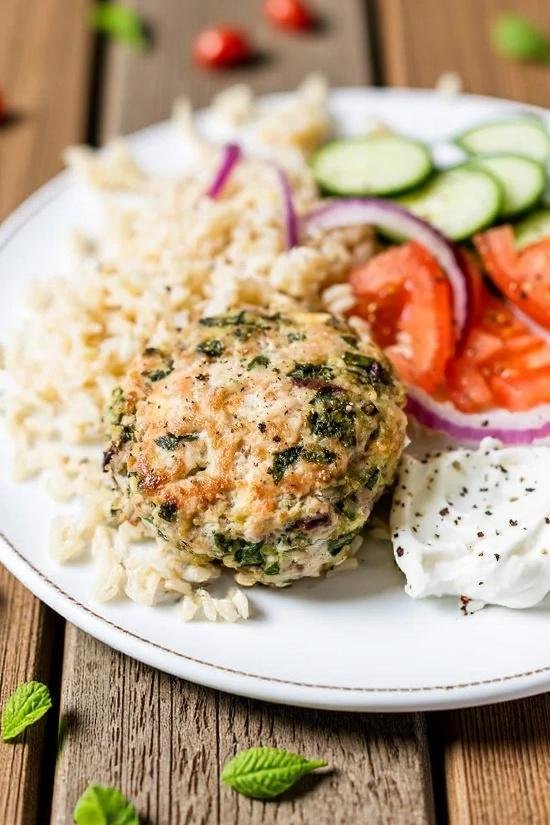
These Greek Turkey Burgers achieve an impressive A grade at 91/100—exceptional for a burger recipe. The Mediterranean-inspired ingredients create a synergistic gut health profile: prebiotic garlic and fiber-rich spinach feed beneficial bacteria, while oregano's antimicrobial compounds and olive oil's polyphenols support gut barrier integrity. The lean turkey protein is gentler on digestion than red meat. At only 255 calories with 29g protein and just 2.5g carbs, this is a macronutrient dream. The gluten-free, low-carb profile makes it suitable for various dietary approaches. Serve with Greek yogurt instead of mayo to push even closer to perfection.
4-Pillar Analysis
🌱 Prebiotic Density
85/100Weight: 35% of total score
Good prebiotic content from garlic, spinach, and Kalamata olives. The oregano and cumin add beneficial plant compounds. Could be enhanced with additional alliums like onion.
🦠 Probiotic Factor
55/100Weight: 15% of total score
Moderate probiotic potential from feta cheese, which contains some beneficial bacteria. Serving suggestion with Greek yogurt (instead of mayo) would significantly boost this score.
🔥 Anti-Inflammatory Index
95/100Weight: 30% of total score
Excellent anti-inflammatory profile. Olive oil spray provides polyphenols, oregano has carvacrol compounds, spinach offers antioxidants, and lean turkey provides quality protein.
📊 Glycemic Stability
98/100Weight: 20% of total score
Outstanding glycemic stability with only 2.5g carbs. High protein (29g) and healthy fats ensure minimal blood sugar impact. Perfect for those managing glucose levels.
Ingredient-by-Ingredient Analysis
| Ingredient | Impact | Score | Notes |
|---|---|---|---|
| Spinach (1 cup packed) | ✓ Positive | 94 | Fiber, polyphenols, nitrates supporting gut motility and microbial diversity |
| Garlic (1 tbsp minced) | ✓ Positive | 95 | Prebiotic inulin, allicin with potent antimicrobial properties, Bifidobacteria fuel |
| Olive Oil Spray | ✓ Positive | 92 | Polyphenols supporting gut barrier function, oleic acid anti-inflammatory |
| Dried Oregano (2 tsp) | ✓ Positive | 90 | Carvacrol and thymol antimicrobial compounds, traditional digestive aid |
| Lean Ground Turkey (1.5 lbs) | ✓ Positive | 85 | Quality protein supporting gut repair, rich in B vitamins and selenium |
| Kalamata Olives (⅓ cup) | ✓ Positive | 82 | Polyphenols, healthy fats, traditionally fermented product |
| Feta Cheese (3 oz) | ✓ Positive | 78 | Some beneficial bacteria, calcium, protein; choose sheep's milk for better profile |
| Ground Cumin (1 tsp) | ✓ Positive | 80 | Antioxidants, traditional digestive support, may stimulate enzyme production |
The Science Behind the Score
Oregano's Mediterranean Magic
Oregano contains carvacrol and thymol—powerful antimicrobial compounds that have been used for digestive support in Mediterranean cultures for millennia. Research published in the Journal of Applied Microbiology shows these compounds can inhibit pathogenic bacteria while having minimal impact on beneficial Lactobacillus species. The 2 teaspoons of dried oregano in each burger provides a meaningful dose of these protective compounds.
Spinach: The Gut-Friendly Green
Spinach provides fiber, polyphenols, and nitrates that support gut health through multiple mechanisms. The thylakoids in spinach may help regulate appetite signals between the gut and brain. Studies suggest spinach consumption is associated with increased microbial diversity—a key marker of gut health. The whole cup of packed spinach distributed among five patties contributes meaningful benefits.
Quality Protein for Gut Health
Both turkey and red meat provide excellent complete protein with all essential amino acids needed for gut lining repair. Grass-fed and pasture-raised options offer better fatty acid profiles. The key is sourcing quality meat – whether it's turkey, beef, lamb, or chicken – and pairing it with fiber-rich vegetables for optimal gut health.
Feta: A Fermented Cheese Option
Traditional feta cheese, especially when made from sheep's milk, undergoes fermentation that may retain some beneficial bacteria. While not a probiotic powerhouse like yogurt, feta contributes to the recipe's overall gut-friendly profile. The calcium and protein add nutritional value, and the tangy flavor means a little goes a long way—limiting saturated fat intake.
Optimization Tips
- 1. Use Greek yogurt instead of mayo: Top with live-culture Greek yogurt for a probiotic boost that complements the Mediterranean flavor profile perfectly.
- 2. Add fresh onion: Include finely diced red onion in the patty mixture or as a topping to significantly boost prebiotic fiber content.
- 3. Choose sheep's milk feta: Traditional sheep's milk feta has a superior fatty acid profile and may contain more beneficial bacteria than cow's milk versions.
- 4. Serve with tzatziki: Cucumber-yogurt tzatziki adds both probiotics (from yogurt) and prebiotics (from garlic) while keeping the Greek theme.
- 5. Add extra virgin olive oil drizzle: A finishing drizzle of EVOO adds polyphenols that the cooking spray can't provide at high temperatures.
Final Verdict
These Greek Turkey Burgers are an outstanding gut-healthy protein option that proves burgers can support digestive wellness. The Mediterranean-inspired ingredient combination—garlic, oregano, olive oil, spinach, and feta—creates a synergistic gut health profile rarely seen in burger recipes. At only 255 calories with 29g protein and minimal carbs, the macronutrient profile is exceptional for those managing weight or blood sugar. Highly recommended for regular rotation in a gut-healthy diet. Serve bunless with a side salad and Greek yogurt dressing for the ultimate gut-friendly meal. One of the best high-protein recipes for gut health we've audited.