Is Kotlety mielone Good for Your Gut?
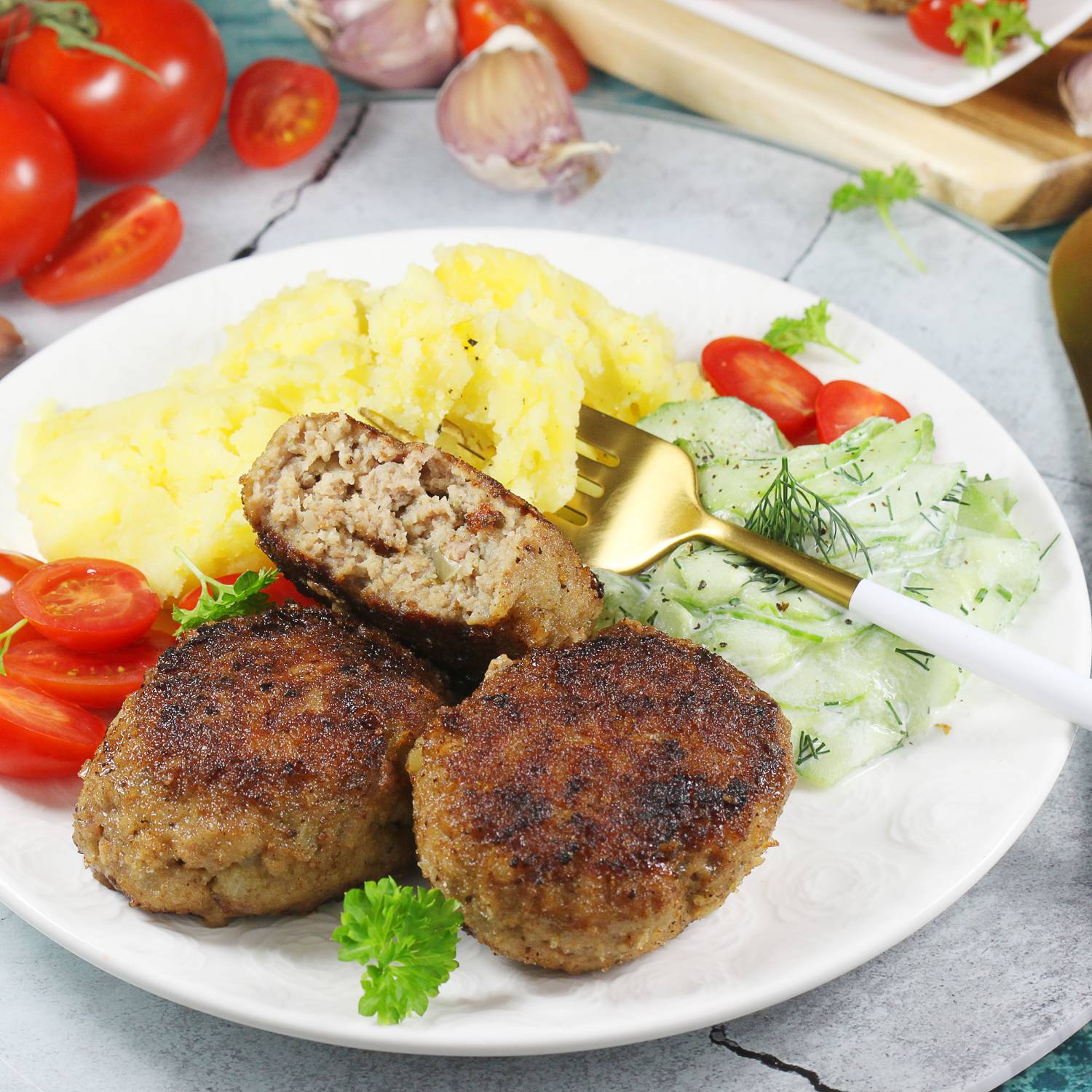
This traditional pork meatball recipe scores low on gut health due to its reliance on refined grains and fried meat, offering minimal fiber and no probiotics while including some inflammatory elements from frying. Strengths include prebiotic contributions from onion and garlic, which support beneficial bacteria, but weaknesses dominate with low overall fiber and potential for blood sugar spikes from breadcrumbs. It's not recommended for regular consumption in a gut-healthy diet without modifications to boost fiber and reduce refined components.
✅ Gut Heroes
- 85 ząbek czosnku - można pominąć 1 sztuka — Garlic contains fructans and allicin, prebiotic compounds that support beneficial gut bacteria growth and have antimicrobial effects against pathogens
- 82 średnia cebula 180 g - 1 sztuka — Onion is rich in inulin, a prebiotic fiber that feeds Bifidobacteria and Lactobacilli, promoting short-chain fatty acid production for gut lining health
⚠️ Gut Villains
- 35 czerstwa lub świeża kajzerka pół 1 sztuki — The kaiser roll is a refined grain that provides minimal fiber and can disrupt gut microbiota balance by favoring pathogenic bacteria over beneficial ones due to low resistant starch content
- 35 bułka tarta 2 łyżki — Breadcrumbs from refined grains offer little fiber and can contribute to gut dysbiosis by providing easily fermentable carbs without prebiotic benefits
- 35 bułka tarta - do smażenia 2 łyżki — Additional breadcrumbs for coating are refined and low in fiber, potentially increasing glycemic load and reducing gut microbial diversity
FODMAP Alert
This recipe contains high-FODMAP ingredients including onion, garlic, and wheat-based kaiser roll and breadcrumbs, which can trigger IBS symptoms like bloating due to fructans and gluten. Alternatives include using green onion tops, garlic-infused oil, and gluten-free breadcrumbs to make it low-FODMAP friendly.
🔄 Quick Swaps to Boost Your Score
Boosts prebiotic fiber with beta-glucans that feed gut bacteria and improve glycemic stability
Provides anti-inflammatory polyphenols to reduce gut inflammation from frying
Adds probiotics from fermentation to introduce beneficial bacteria and enhance microbiome health
Important Medical Disclaimer
I am NOT a doctor or medical professional. The BetterEats Score is an educational tool based on nutritional research. This is NOT medical advice.
Our FODMAP information is based on Monash University Low FODMAP research, the world's leading authority on FODMAPs and digestive health. However, this is NOT a substitute for professional guidance. Always consult a qualified healthcare professional before making dietary changes.
📊 Detailed Analysis
4-Pillar Gut Health Analysis
This recipe has limited prebiotic fiber sources, primarily from the onion and optional garlic, which provide inulin and fructans that feed beneficial gut bacteria. However, the overall fiber content is low due to the dominance of meat and refined grains like the kaiser roll and breadcrumbs, with few high-fiber vegetables or legumes included. This results in minimal support for gut microbiome diversity.
There are no fermented foods or live cultures in this recipe, offering no direct probiotic benefits to introduce beneficial bacteria. The ingredients are neutral and not hostile to existing gut probiotics, but the lack of any probiotic elements limits its potential. Optional additions like mushrooms could slightly enhance microbial environment but are not standard.
Onion and garlic contribute some anti-inflammatory compounds like quercetin and allicin, which can reduce gut inflammation. However, the fried pork and potential use of high omega-6 oils for frying introduce inflammatory elements that balance out the benefits. Overall, the recipe is neither strongly anti-inflammatory nor highly inflammatory.
The recipe features low-GI proteins from pork and egg, which help stabilize blood sugar, but the refined carbohydrates in the kaiser roll and breadcrumbs can cause moderate spikes. With minimal added sugars and some fiber from onion, the overall glycemic impact is moderate. Frying adds fats that may slow absorption slightly.
Full Ingredient Breakdown
Pork shoulder is a source of protein but lacks fiber or prebiotics, making it neutral for gut health; excessive consumption of red meat can promote inflammatory gut bacteria like Bilophila wadsworthia.
The kaiser roll is a refined grain that provides minimal fiber and can disrupt gut microbiota balance by favoring pathogenic bacteria over beneficial ones due to low resistant starch content.
Eggs offer neutral protein with some choline that supports gut barrier function, but they lack significant prebiotic or probiotic elements to actively benefit the microbiome.
Onion is rich in inulin, a prebiotic fiber that feeds Bifidobacteria and Lactobacilli, promoting short-chain fatty acid production for gut lining health.
Garlic contains fructans and allicin, prebiotic compounds that support beneficial gut bacteria growth and have antimicrobial effects against pathogens.
Breadcrumbs from refined grains offer little fiber and can contribute to gut dysbiosis by providing easily fermentable carbs without prebiotic benefits.
Marjoram is a mild herb with minor antioxidant properties that may support gut barrier integrity without significant positive or negative impacts.
Salt in moderation is neutral but excessive amounts can disrupt gut microbiota balance by favoring salt-tolerant pathogens.
Black pepper provides piperine, which may enhance nutrient absorption in the gut without major effects on microbiome composition.
Additional breadcrumbs for coating are refined and low in fiber, potentially increasing glycemic load and reducing gut microbial diversity.
Goose fat or oil is high in saturated or omega-6 fats, which can promote inflammation in the gut by altering bile acid metabolism and favoring pro-inflammatory bacteria.
🔬 Science Notes
Prebiotic Effects of Onion and Garlic
Onions and garlic are rich in fructo-oligosaccharides (FOS), which serve as prebiotics by selectively stimulating the growth of Bifidobacteria and Lactobacilli in the colon. Studies, such as those published in the Journal of Agricultural and Food Chemistry, show that FOS fermentation produces short-chain fatty acids like butyrate, which nourish colon cells and reduce inflammation. However, their high FODMAP content can exacerbate symptoms in IBS patients.
Impact of Refined Grains on Gut Microbiome
Refined grains like those in kaiser rolls and breadcrumbs lack the bran and germ, resulting in low fiber and high glycemic index, which can lead to dysbiosis by favoring pathogenic bacteria over fiber-fermenting species. Research in Nature Reviews Microbiology indicates that diets high in refined carbs reduce microbial diversity and increase gut permeability. This contributes to conditions like leaky gut syndrome over time.
Red Meat and Gut Inflammation
Red meats like pork shoulder contain heme iron and can promote the growth of inflammatory bacteria such as Escherichia coli when consumed in excess, as shown in studies from the American Journal of Clinical Nutrition. Frying exacerbates this by generating advanced glycation end-products (AGEs) that trigger gut inflammation. Moderation and pairing with anti-inflammatory foods can mitigate these effects.
📚 Research & Citations
Our gut health scoring methodology is informed by peer-reviewed research. Key references include:
Development of the Low FODMAP Diet - The original research
PubMed - Effects of prebiotics on gut microbiota composition
PubMed - Dietary patterns and inflammation markers
Read our full methodology → for detailed scoring criteria and additional research citations.
✨ Full Optimization Guide
All Ingredient Swaps:
Boosts prebiotic fiber with beta-glucans that feed gut bacteria and improve glycemic stability
Provides anti-inflammatory polyphenols to reduce gut inflammation from frying
Adds probiotics from fermentation to introduce beneficial bacteria and enhance microbiome health