Is 1-Pot Pumpkin Turkey Chili (Freezer-Friendly!) Good for Your Gut?
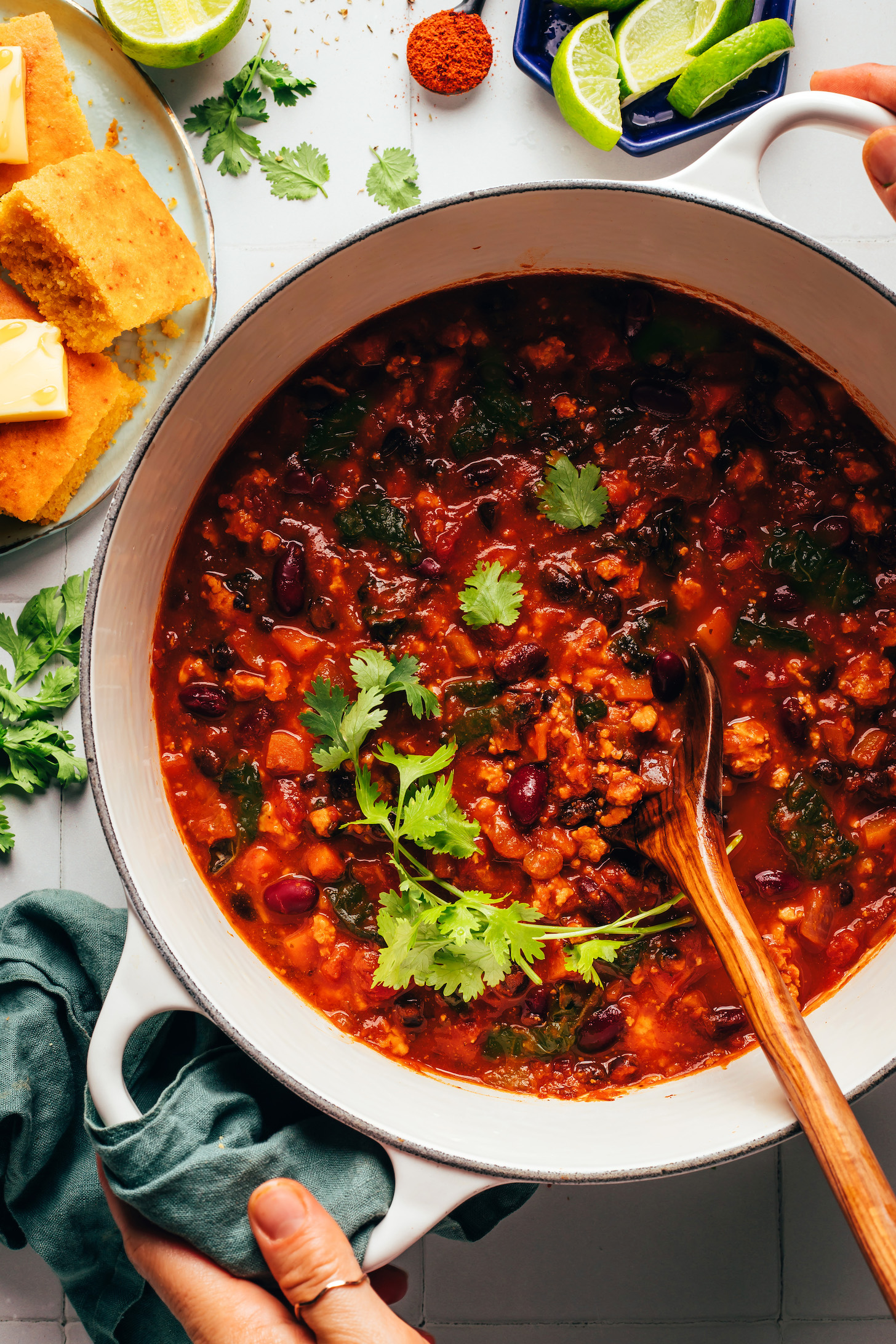
This chili is a high-fiber, microbiome-supportive meal driven by beans, pumpkin, and a wide variety of vegetables, giving it strong prebiotic density and good glycemic stability. Anti-inflammatory potential is solid thanks to olive/avocado oil and a polyphenol-rich spice blend, though omega-3 content is low unless you add an omega-3 source. The main gut downside is IBS/FODMAP load: onion, garlic, and beans are common triggers despite being prebiotic “gut heroes.” Adding a live-culture topping (yogurt/kefir) and making low-FODMAP swaps can significantly improve tolerance while keeping the fiber benefits.
✅ Gut Heroes
- 87 3 (15 oz.) cans beans of choice, drained (black, kidney, and/or pinto beans) — Beans are a major microbiome booster due to resistant starch and soluble fibers that increase SCFA production (especially butyrate)
- 85 4-5 large cloves garlic, minced — Garlic contains inulin and fructo-oligosaccharides that strongly stimulate beneficial bacteria and SCFA production
- 82 1 large onion, diced — Onion contains fructans (prebiotic fibers) that selectively feed beneficial microbes like Bifidobacteria
⚠️ Gut Villains
- 55 1 – 1 ½ tsp sea salt — Salt is neutral-to-negative for gut health when intake is high, as excess sodium can correlate with less favorable microbial patterns in some studies
FODMAP Alert
High-FODMAP ingredients: onion (fructans), garlic (fructans), and beans (GOS) are common IBS triggers despite being highly prebiotic. For a lower-FODMAP approach, use scallion green tops/chives instead of onion, garlic-infused oil instead of garlic, and reduce bean portion per serving (or choose canned lentils in smaller portions and rinse very well). Avocado and green onion (white parts) can also be problematic in larger amounts—keep portions modest.
🔄 Quick Swaps to Boost Your Score
Reduces high-FODMAP fructans while keeping allium-like flavor; often better tolerated in IBS.
Maintains garlic aroma with minimal fructans (FODMAPs don’t infuse well into oil), improving gut comfort.
Boosts polyphenols that support anti-inflammatory signaling and gut barrier function.
Important Medical Disclaimer
I am NOT a doctor or medical professional. The BetterEats Score is an educational tool based on nutritional research. This is NOT medical advice.
Our FODMAP information is based on Monash University Low FODMAP research, the world's leading authority on FODMAPs and digestive health. However, this is NOT a substitute for professional guidance. Always consult a qualified healthcare professional before making dietary changes.
📊 Detailed Analysis
4-Pillar Gut Health Analysis
This chili is prebiotic-dense due to multiple fiber sources: beans (resistant starch + soluble fiber), pumpkin, carrots, peppers, tomatoes, and kale. Onion and garlic add strong prebiotic fructans that can feed Bifidobacteria, though they are high-FODMAP for many with IBS.
The base recipe contains no fermented foods with live cultures, so direct probiotic delivery is low. Optional yogurt could add probiotics if it contains live active cultures and is added at serving (not cooked).
Olive/avocado oil and a spice blend (cumin, oregano, smoked paprika, chili/chipotle) provide polyphenols that can support a healthier inflammatory tone. The recipe is largely whole-food-based, though it lacks omega-3-rich ingredients and can be sodium-heavy depending on canned goods.
Beans and vegetables provide fiber that slows glucose absorption and improves post-meal glycemic stability. Pumpkin and carrots add some natural sugars, but the overall meal remains low-to-moderate glycemic due to high fiber and protein from turkey/beans.
Full Ingredient Breakdown
Olive oil is rich in monounsaturated fats and polyphenols that can support gut barrier function and reduce inflammatory signaling. Using it instead of refined seed oils helps lower omega-6 load.
Onion contains fructans (prebiotic fibers) that selectively feed beneficial microbes like Bifidobacteria. However, fructans are high-FODMAP and can trigger gas/bloating in IBS.
Carrots provide soluble fiber and carotenoids that can support mucosal immunity and microbial diversity. Their fiber helps slow carbohydrate absorption and supports stool regularity.
Bell peppers provide vitamin C and polyphenols that can reduce oxidative stress in the gut environment. Their fiber contributes to SCFA production when fermented by gut bacteria.
Turkey adds protein that supports satiety and stable blood sugar, indirectly benefiting the gut by reducing cravings for refined carbs. It provides little fermentable fiber, so it’s neutral for microbiome feeding.
Garlic contains inulin and fructo-oligosaccharides that strongly stimulate beneficial bacteria and SCFA production. It is also high-FODMAP, which can worsen IBS symptoms despite its prebiotic benefits.
Chiles provide capsaicin, which may influence gut motility and microbial composition in some people. For sensitive guts, spicy foods can aggravate reflux or IBS symptoms even if not inherently harmful.
Tomato paste contributes lycopene and polyphenols with antioxidant activity. It’s generally gut-friendly, though concentrated tomato can be acidic for reflux-prone individuals.
Spices add polyphenols that can act as microbial substrates and may reduce inflammation. Some blends include garlic/onion powder, which can increase FODMAP load for IBS.
Cumin provides aromatic polyphenols that may support digestion via bile flow and antimicrobial balance. Amounts used are small, so effects are supportive but modest.
Oregano contains polyphenols (e.g., rosmarinic acid) that can modulate inflammation and oxidative stress. In culinary doses it supports flavor without adding sugar or refined carbs.
Paprika contributes carotenoids and polyphenols that support antioxidant defenses. It’s generally well tolerated and adds flavor without increasing glycemic load.
Chipotle adds smoky polyphenols and capsaicin-related compounds that may influence gut motility. For IBS or gastritis, heat can be a symptom trigger even if microbiome-neutral.
Salt is neutral-to-negative for gut health when intake is high, as excess sodium can correlate with less favorable microbial patterns in some studies. Keeping sodium moderate supports blood pressure and overall inflammatory balance.
Black pepper contains piperine, which can enhance absorption of certain phytonutrients. In sensitive individuals it may irritate reflux, but typical amounts are generally well tolerated.
Tomatoes provide polyphenols and lycopene that support anti-inflammatory pathways. Canned versions can be higher in sodium, and spicy green chiles may be a trigger for sensitive guts.
Beans are a major microbiome booster due to resistant starch and soluble fibers that increase SCFA production (especially butyrate). They are also high-FODMAP (GOS), which can cause gas/bloating in IBS unless portioned carefully or well-rinsed.
Pumpkin provides soluble fiber (pectin-like) that supports stool consistency and feeds beneficial microbes. It also adds carotenoids that support mucosal immune function.
Water supports hydration, which helps fiber do its job for bowel regularity. It has no direct prebiotic/probiotic effect but supports digestion mechanics.
Kale provides fiber and polyphenols that can increase microbial diversity and SCFA production. Its micronutrients (e.g., folate, vitamin K) support gut lining maintenance and immune signaling.
Avocado provides fiber and monounsaturated fats that support bile acid balance and gut barrier integrity. In larger portions it can be higher-FODMAP (sorbitol), so portion size matters for IBS.
Cilantro adds polyphenols with potential antioxidant effects, and green onion can add mild prebiotic fructans. Green onion (especially the white part) can be high-FODMAP for some.
Lime adds acidity that can brighten flavor and may support iron absorption from plant foods. It has minimal fiber but contributes small amounts of flavonoids.
🔬 Science Notes
SCFAs from Legume Fiber (Butyrate Support)
Beans contain resistant starch and soluble fibers that gut microbes ferment into short-chain fatty acids (SCFAs) like butyrate. Butyrate is a key fuel for colonocytes and is associated with improved gut barrier integrity and lower intestinal inflammation.
Fructans in Onion & Garlic: Prebiotic but High-FODMAP
Onion and garlic are rich in fructans (inulin/FOS), which can selectively feed beneficial bacteria such as Bifidobacteria. In IBS, fructans are poorly absorbed and rapidly fermented, which can increase gas production and draw water into the bowel, worsening bloating/diarrhea.
Polyphenols from Spices and Vegetables as Microbiome Modulators
Spices (paprika, oregano, cumin, chili) and colorful vegetables provide polyphenols that can act as substrates for microbial metabolism. Polyphenol metabolites may reduce oxidative stress and influence microbial composition toward more beneficial taxa.
Fiber + Protein Improves Post-Meal Glycemic Response
Meals combining viscous/soluble fiber (beans, pumpkin) with protein (turkey) typically slow gastric emptying and reduce glucose spikes. More stable blood sugar can indirectly support gut health by reducing inflammatory signaling and cravings for refined carbohydrates.
📚 Research & Citations
Our gut health scoring methodology is informed by peer-reviewed research. Key references include:
Development of the Low FODMAP Diet - The original research
PubMed - Effects of prebiotics on gut microbiota composition
PubMed - Dietary patterns and inflammation markers
Read our full methodology → for detailed scoring criteria and additional research citations.
✨ Full Optimization Guide
All Ingredient Swaps:
Reduces high-FODMAP fructans while keeping allium-like flavor; often better tolerated in IBS.
Maintains garlic aroma with minimal fructans (FODMAPs don’t infuse well into oil), improving gut comfort.
Boosts polyphenols that support anti-inflammatory signaling and gut barrier function.
Improves mineral content and palatability while keeping sodium controlled if low-sodium is chosen.
Rinsing reduces gas-producing oligosaccharides on the surface; lentils can diversify fiber types and SCFA output.
Adds probiotics plus flax mucilage and ALA omega-3 to support anti-inflammatory balance and bowel regularity.
Adds beta-glucan (barley) or additional fiber (quinoa) to increase prebiotic density and improve glycemic stability.