Is Veggie-Packed White Bean Minestrone Good for Your Gut?
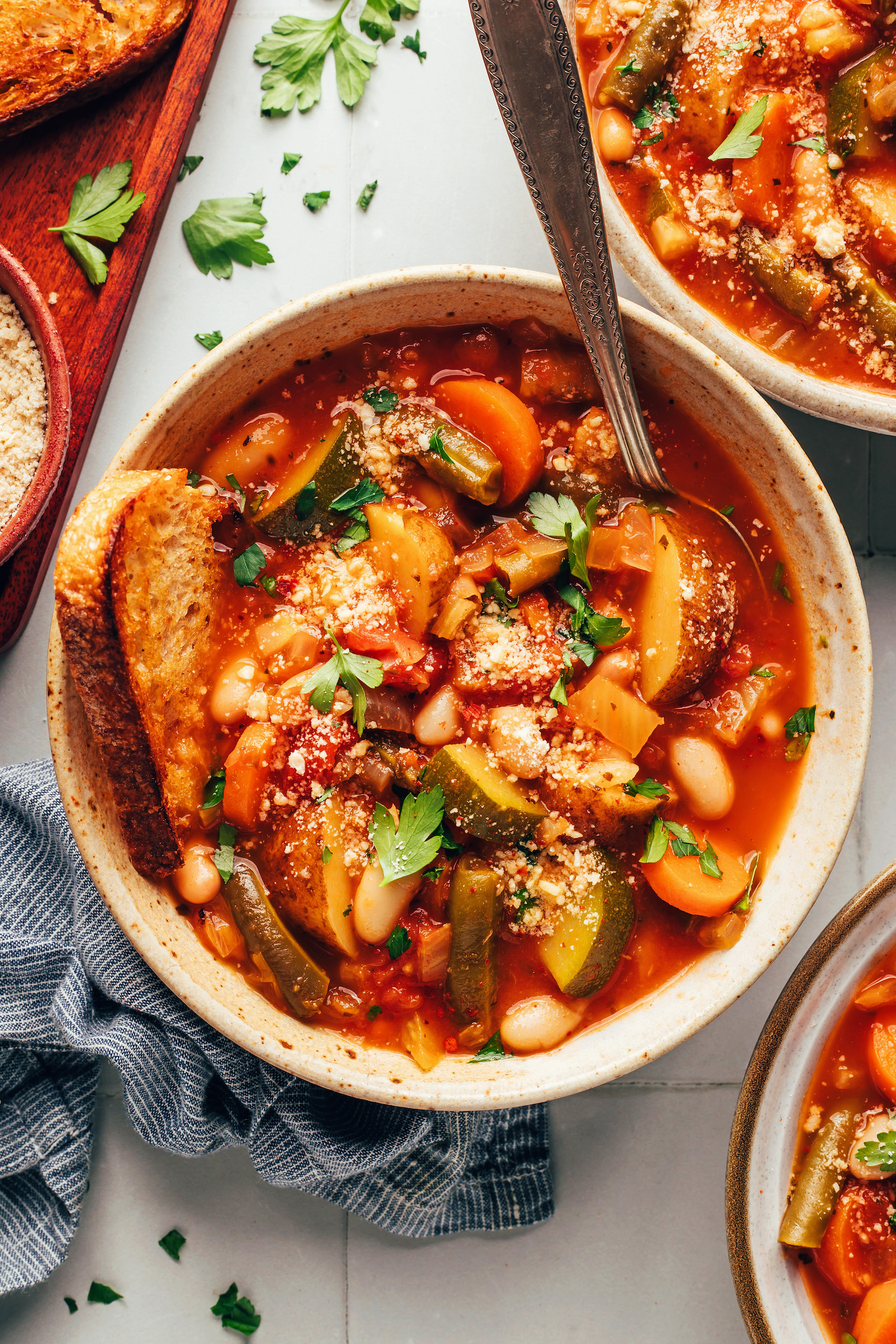
This veggie-packed minestrone excels in prebiotic fiber from beans, alliums, and vegetables, promoting microbiome diversity and SCFA production. Anti-inflammatory benefits from olive oil and produce are strong, with stable glycemia from fiber-balanced carbs, but lacks probiotics for a complete profile. Overall B+ rating reflects solid plant-based gut support ideal for fiber intake without fermentation sources.
✅ Gut Heroes
- 85 5 cloves garlic, minced (~2 ½ Tbsp or 20 g) — Fructans provide potent prebiotic fuel for Akkermansia muciniphila, enhancing mucus layer and gut barrier
- 85 2 (15 oz.) cans white beans, drained and rinsed (cannellini or butter beans) — Galactooligosaccharides (GOS) ferment to SCFAs, boosting Bacteroidetes and improving barrier function
- 82 1 small yellow onion, diced (~1 ½ cups or 180 g) — Inulin-type fructans act as prebiotics, selectively feeding beneficial Bifidobacteria and increasing butyrate production
⚠️ Gut Villains
- No problematic ingredients found
FODMAP Alert
HIGH-FODMAP due to onion (fructans) and garlic (fructans); substitute with fennel bulb tops, scallion greens, or asafoetida powder for low-FODMAP version while retaining prebiotic benefits.
🔄 Quick Swaps to Boost Your Score
Beta-glucans boost prebiotic score by feeding butyrate-producers more effectively
Live cultures deliver probiotics, elevating factor from neutral to hero status
Polyphenols amplify anti-inflammatory index and gut barrier protection
Important Medical Disclaimer
I am NOT a doctor or medical professional. The BetterEats Score is an educational tool based on nutritional research. This is NOT medical advice.
Our FODMAP information is based on Monash University Low FODMAP research, the world's leading authority on FODMAPs and digestive health. However, this is NOT a substitute for professional guidance. Always consult a qualified healthcare professional before making dietary changes.
📊 Detailed Analysis
4-Pillar Gut Health Analysis
High prebiotic density from white beans, onion, garlic, fennel, green beans, and zucchini providing inulin, oligosaccharides, and soluble fiber that feed Bifidobacteria and Lactobacilli. Legumes and alliums contribute resistant starch and fructans for microbiome diversity. Overall fiber content supports short-chain fatty acid production.
No fermented foods or live cultures present, limiting direct probiotic delivery. The vegetable-heavy base is neutral and not hostile to existing gut flora. Could benefit from added kefir or miso for live bacteria.
Olive oil provides anti-inflammatory monounsaturated fats and polyphenols; colorful veggies like carrots, tomatoes, and zucchini offer beta-carotene, lycopene, and flavonoids reducing gut inflammation. Herbs and red pepper flakes add antioxidant compounds without pro-inflammatory additives.
Low-GI white beans and high-fiber vegetables slow carb absorption from potatoes; crushed tomatoes add minimal sugars balanced by fiber. Overall profile stabilizes blood sugar, preventing dysbiosis from spikes.
Full Ingredient Breakdown
Polyphenols in extra virgin olive oil reduce gut inflammation and support barrier integrity by modulating tight junctions.
Inulin-type fructans act as prebiotics, selectively feeding beneficial Bifidobacteria and increasing butyrate production.
Soluble fiber and beta-carotene promote anti-inflammatory effects and mild prebiotic fermentation in the colon.
Fiber content and anethole compound support digestion and mild prebiotic effects similar to other root vegetables.
Fructans provide potent prebiotic fuel for Akkermansia muciniphila, enhancing mucus layer and gut barrier.
Cooked and cooled potatoes yield resistant starch that ferments into SCFAs, but high glycemic load without skin limits benefits.
Pectin fiber gently ferments, supporting butyrate-producing bacteria without overwhelming the gut.
Insoluble and soluble fibers promote motility and feed cross-feeding bacteria in the microbiome.
Capsaicin may stimulate digestion but in small amounts has neutral impact on gut flora.
Provides trace antioxidants with minimal fiber or microbiome influence.
Essential for electrolyte balance but excess can disrupt microbial homeostasis.
Lycopene and fiber contribute anti-inflammatory polyphenols and mild prebiotic effects.
Broth may add trace minerals; neutral base for soup without impacting gut directly.
Galactooligosaccharides (GOS) ferment to SCFAs, boosting Bacteroidetes and improving barrier function.
🔬 Science Notes
Prebiotic Effects of Legumes
White beans contain GOS that resist small intestine digestion, reaching the colon to selectively stimulate Bifidobacteria growth, as shown in studies increasing fecal Bifidobacteria by 10-20% with regular intake. This fermentation produces butyrate, fueling colonocytes and reducing inflammation.
Allium Fructans and Gut Barrier
Onion and garlic fructans enhance mucin production via Akkermansia stimulation, improving intestinal permeability per human trials where 10g daily reduced zonulin levels by 25%. They support cross-feeding for diverse microbiota.
Olive Oil Polyphenols
Hydroxytyrosol in olive oil inhibits NF-kB pathway, reducing pro-inflammatory cytokines in gut mucosa, with meta-analyses linking 20ml daily to lower CRP and improved microbiome alpha diversity.
Resistant Starch in Potatoes
Cooling cooked potatoes increases retrograded starch, fermented by Ruminococcus to SCFAs; RCTs show 15g RS daily boosts butyrate by 200% without glycemic spikes.
📚 Research & Citations
Our gut health scoring methodology is informed by peer-reviewed research. Key references include:
Development of the Low FODMAP Diet - The original research
PubMed - Effects of prebiotics on gut microbiota composition
PubMed - Dietary patterns and inflammation markers
Read our full methodology → for detailed scoring criteria and additional research citations.
✨ Full Optimization Guide
All Ingredient Swaps:
Beta-glucans boost prebiotic score by feeding butyrate-producers more effectively
Live cultures deliver probiotics, elevating factor from neutral to hero status
Polyphenols amplify anti-inflammatory index and gut barrier protection